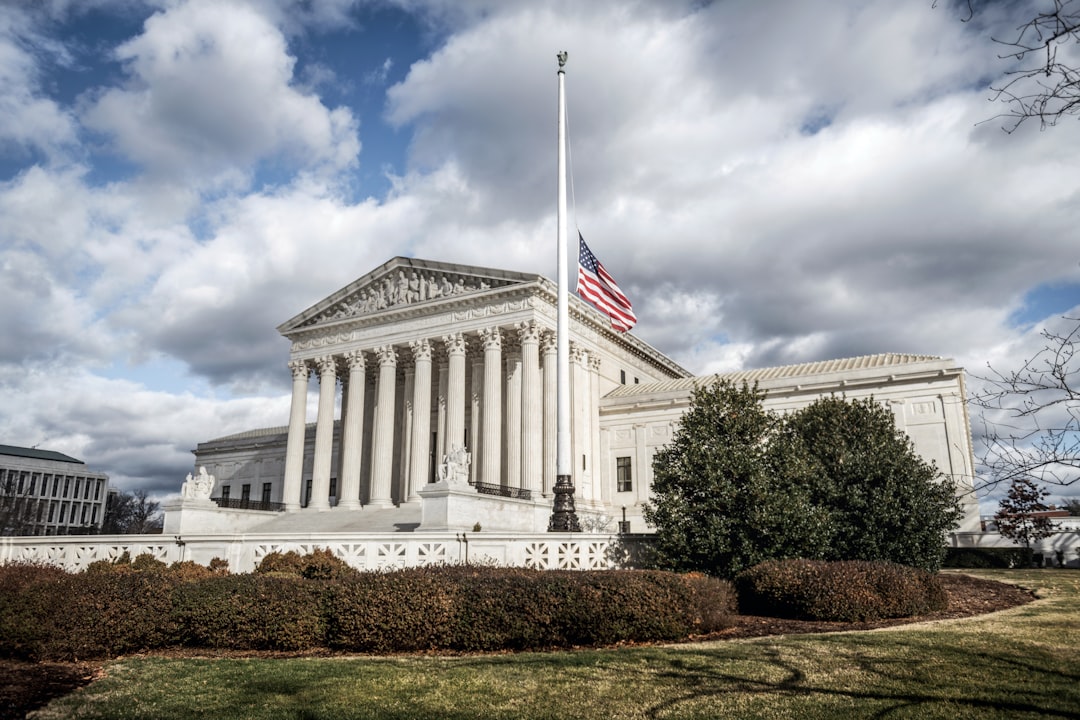
The Supreme Court faces a critical decision on whether to allow the federal government to access sensitive personal data for voter verification, raising significant questions about administrative overreach and individual privacy rights.
Federal Courts Block Expanded Data Access
Lawyers representing the League of Women Voters and the Electronic Privacy Information Center urged justices on Tuesday to maintain a lower court ruling that prohibits the Trump administration from using a centralized database to verify voter citizenship. The request comes as the executive branch attempts to expand its authority over election administration, a move critics argue violates federal privacy statutes.
The legal battle centers on an executive order signed on March 25, which directed the Department of Homeland Security and the Social Security Administration to create systems allowing state and local governments to verify the citizenship and immigration status of voters. In response, agencies overhauled the Systematic Alien Verification for Entitlements (SAVE) system. The modifications allow the government to include records of U.S.-born citizens, access Social Security numbers, and conduct multiple simultaneous searches.
U.S. District Judge Sparkle Sooknanan blocked the use of the modified system on June 22. She ruled that the changes violate federal privacy laws, the Social Security Act, and statutes governing administrative agencies. Judge Sooknanan warned that states were actively removing U.S. citizens from voter rolls based on inaccurate information generated by the database.
“The federal government has knowingly trampled on the privacy rights of American citizens in a manner that threatens the sacred right to vote,” Judge Sooknanan stated in her ruling.
Appeals Court Rejects Government Stay
The administration sought to pause the district court’s order while its appeal proceeded. On Sept. 4, the U.S. Court of Appeals for the District of Columbia Circuit rejected that request by a vote of 2-1. The appeals court ordered the case to be fast-tracked and instructed litigants to propose a briefing schedule by Sept. 14.
Litigants agreed to postpone the briefing schedule pending action from the Supreme Court. On Sept. 8, U.S. Solicitor General D. John Sauer asked the high court to pause Judge Sooknanan’s ruling. Sauer argued that the challengers lack standing because the federal government is not the source of the alleged injury.
Nikhel Sus, representing the League of Women Voters and EPIC, countered that third-party reactions to government action can establish standing. The groups warned that accepting the administration’s interpretation of immigration law would grant the Department of Homeland Security unlimited power to obtain and disclose sensitive information.
“The government has recklessly created an error-laden master citizenship database that endangers millions of Americans’ privacy and voting rights,” Sus said in the filing.
Congressional Authorization Lacking
The dispute highlights a broader tension between executive authority and legislative oversight. Several bills that would expressly authorize the SAVE modifications have failed in Congress, suggesting a lack of bipartisan support for expanding federal data collection powers in this manner.
The pre-2025 version of the SAVE system remains in place for individualized citizenship checks. The current litigation focuses on whether the expanded capabilities—specifically the ability to access Social Security numbers and run bulk searches—exceed statutory authority.
This case follows closely on the heels of another Supreme Court decision. Less than 24 hours before the filing regarding the voter database, the high court rejected the federal government’s request to implement portions of a U.S. Postal Service rule affecting mail-in ballots. The rapid succession of cases indicates an ongoing legal struggle over the boundaries of federal power in election administration.
The outcome will determine whether states can rely on the expanded SAVE system for voter verification or if the district court’s privacy protections remain enforceable. The justices have not yet set a timeline for their decision.