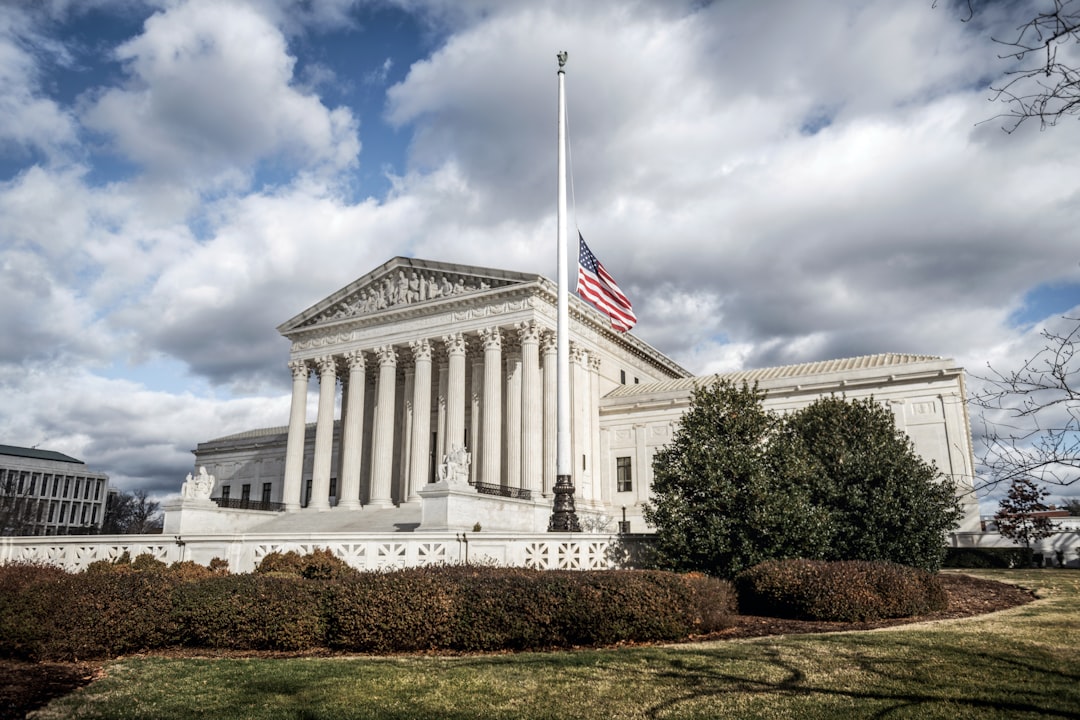
The Supreme Court declined Monday to intervene in a lower court ruling that blocks the Trump administration’s attempt to restrict mail-in voting procedures through the U.S. Postal Service. The decision leaves intact a preliminary injunction issued by a federal district judge, preserving current postal rules for the upcoming midterm elections.
Postal Rule Challenge Rejected
The legal battle centers on new regulations proposed by the Postal Service that would tighten restrictions on mail-in ballots. U.S. District Judge Carl Nichols, who was appointed by President Donald Trump during his first term, granted a preliminary injunction late Sunday. Judge Nichols ruled that the proposed changes exceeded the agency’s statutory authority and could create unnecessary barriers for voters attempting to cast ballots by mail.
The Democratic Party and civil rights organizations, including the NAACP, sought the injunction, arguing that the federal government was making an unlawful intrusion into state election administration. The Supreme Court’s denial of the administration’s request means Judge Nichols’ order remains in effect through November.
Justice Brett Kavanaugh filed a concurring opinion regarding the decision. In contrast, Justice Samuel Alito authored a dissenting opinion, joined by Justice Clarence Thomas, expressing disagreement with the majority’s refusal to pause the lower court’s ruling.
Voter Roll Verification Pending
In a separate but related matter, the Trump administration asked the Supreme Court to allow the use of the Department of Homeland Security’s Systematic Alien Verification for Entitlements (SAVE) database. The administration argued that the database should be used to identify noncitizens on state voter rolls. A response to this request is due today by 4 p.m. EDT.
The volume of high-stakes election litigation has surged beyond historical norms, particularly for a midterm cycle, according to legal experts cited by The Washington Post. This trend follows a Supreme Court decision that weakened provisions of the 1965 Voting Rights Act, prompting Southern states to redraw electoral maps. President Trump subsequently pressured Republican-led states to adjust their own districts, while Democrats made efforts to respond in kind.
Constitutional Challenges Expand
Beyond voting access, the Court is preparing to address broader questions regarding federal power and individual rights. The justices will meet on September 28 to consider a challenge from Maine lobsterman Frank Thompson. Thompson filed a lawsuit arguing that a state requirement to install GPS tracking devices on his boat constitutes unreasonable search and seizure under the Fourth Amendment. He contends the monitoring violates his constitutional rights, even as authorities maintain the program is essential for studying declining crustacean populations in New England. A federal appeals court previously denied Thompson’s claim last year.
The Court also faces a significant Second Amendment challenge from Curtis Squire, who was arrested following a street brawl in New Orleans in February 2024. During the incident, dozens of gunshots were fired; one bullet struck a woman’s leg, and another woman was stabbed. Prosecutors initially charged Squire with attempted second-degree murder but dropped that charge after ballistic testing showed a Glock pistol found in his home did not match the weapon used in the shooting.
Squire, who has a prior conviction for heroin distribution, faces a federal charge under 18 USC 922(g)(1), which prohibits firearm possession by individuals with felony records. Squire is challenging his conviction on constitutional grounds, arguing that Congress lacked the authority to enact the statute. His case is pending before the full U.S. Court of Appeals for the 5th Circuit.
Commerce Clause Skepticism
The Squire case arrives as Justice Clarence Thomas has reiterated skepticism regarding the Commerce Clause justification for federal bans on intrastate gun possession. In a concurring opinion during the 2025-26 term, Justice Thomas questioned the constitutional basis for such federal regulations.
The Court’s recent docket reflects a broader shift in how justices view federal authority over state and local matters. Earlier this year, the Supreme Court prevented Missouri from using a new congressional map designed to favor Republicans in November’s elections, signaling continued judicial scrutiny of partisan gerrymandering efforts.
As the midterm election approaches, these decisions will shape the legal landscape for voting rights, federal enforcement powers, and individual liberties. The denial of the Trump administration’s request regarding postal rules ensures that current mail-in voting procedures remain unchanged, while pending cases on voter verification and gun ownership promise further constitutional debates in the coming months.