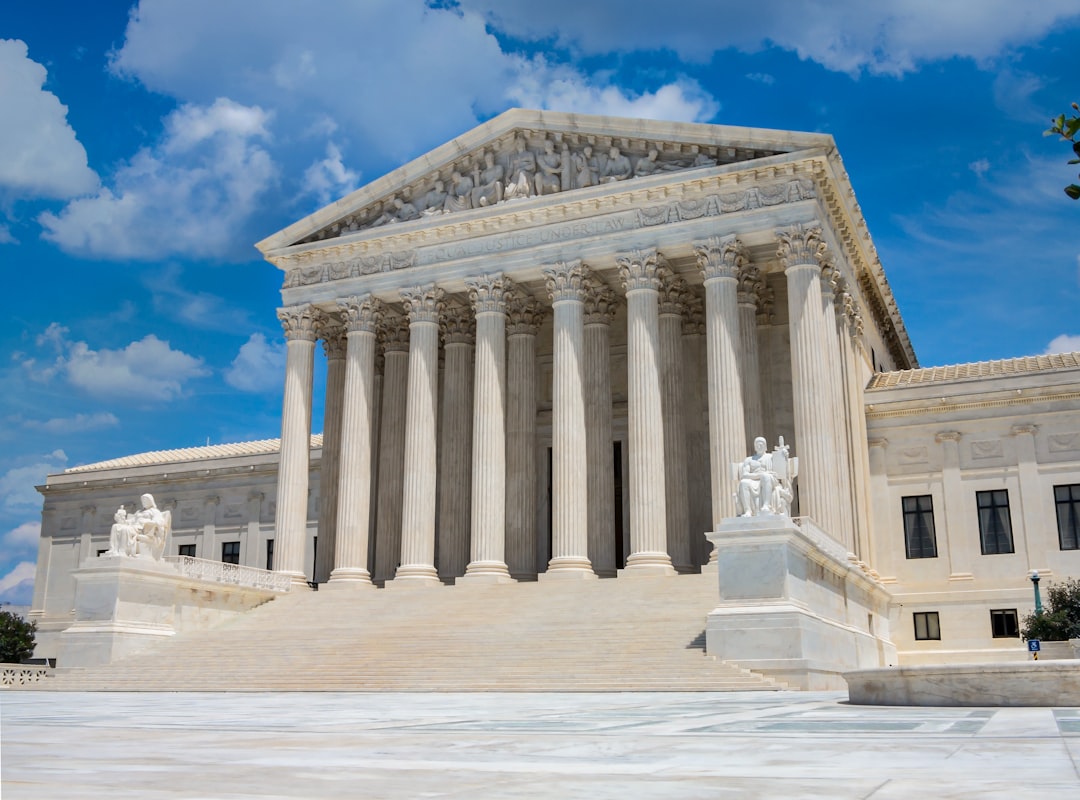
The Department of Justice asked the Supreme Court on Monday to lift two federal court orders blocking President Donald Trump’s executive order restricting mail voting. The administration is seeking immediate relief from rulings by U.S. District Judges Carl Nichols and Indira Talwani, which have barred the U.S. Postal Service from enforcing new rules designed to standardize ballot security and verify voter eligibility.
Solicitor General D. John Sauer filed the request on behalf of the Trump administration, asking the high court to “immediately grant a parallel stay” against Judge Nichols’ decision if it agrees to pause Judge Talwani’s earlier block. The filings mark an escalation in the legal battle over federal authority to regulate state election procedures and postal delivery standards for ballots.
Judge Nichols, who was nominated by President Trump in 2018, issued his ruling on Sunday. He fully barred the USPS from executing any part of its mail voting rule and prohibited states from voluntarily complying with the restrictions. The judge sided with Democratic plaintiffs, the League of United Latin American Citizens, and the NAACP, finding that the agency likely overstepped its authority in adopting the restrictions last month.
Judge Talwani issued her order on September 4, barring the USPS from compelling states to comply with the new postal rule. The DOJ had previously asked the Supreme Court to pause Talwani’s block. Now, the administration is seeking a comprehensive stay that would allow the executive order to take effect despite the lower court injunctions.
Under the contested rule, states would be required to provide the federal government with lists of individuals who requested mail ballots for the upcoming election. States would also have to adhere to specific design requirements for envelopes used to send voters mail ballots. The USPS has stated it will not deliver ballots to voters in states that fail to comply with these new standards.
A critical component of enforcement is the “U.S. Federal Ballot Mail Portal,” an online system intended to facilitate compliance and verification. The agency expected to release the portal last week but did not. Judge Nichols’ order currently bars the USPS from launching the portal. States and counties have already mailed or printed ballot envelopes that cannot comply with the new rule due to the missing portal, creating logistical confusion for election officials.
If the Supreme Court grants Sauer’s request, the USPS would likely refuse to deliver hundreds of thousands of mail ballots. Solicitor General Sauer argued before the justices that the court should allow the USPS rule to go into effect even if voters are disenfranchised during the transition period. The administration maintains that the executive order is within presidential authority and necessary for election integrity.
The Elias Law Group represents the Democratic plaintiffs in this case. Marc Elias, the firm’s chair and founder of Democracy Docket, has been a prominent figure in litigation surrounding voting rights and election administration. The legal challenge underscores deep divisions over the balance of power between federal agencies and state election officials.
In related election news, Missouri voters are seeking $80 million in damages following Secretary of State Denny Hoskins’ handling of redistricting efforts. Voters argue that Hoskins violated his responsibilities by rejecting a referendum and participating in a legal battle to keep a gerrymandered map in play for the November elections. The case highlights ongoing tensions between state officials and constituents over electoral maps and democratic processes.
The Supreme Court’s decision on the DOJ’s stay request will determine whether Trump’s mail voting restrictions can be implemented ahead of the midterm elections. A ruling in favor of the administration would empower federal agencies to enforce stricter ballot verification standards, while a denial would maintain the status quo and allow states to continue using existing mail-in voting procedures without federal interference.
The outcome carries significant implications for election security, voter access, and the scope of executive power. Conservative advocates argue that the restrictions are necessary to prevent fraud and ensure accurate vote counting, while critics contend they suppress turnout and infringe on state sovereignty. The justices’ ruling will set a precedent for future disputes over federal involvement in state-run elections.
As the legal battle unfolds, election officials across the country are monitoring developments closely. Many have already prepared materials based on current rules, making last-minute changes difficult. The uncertainty surrounding the mail ballot portal and potential delivery refusals adds complexity to an already strained electoral infrastructure.
The Department of Justice’s aggressive posture reflects the Trump administration’s broader strategy to reshape election administration through executive action and judicial intervention. Whether the Supreme Court agrees remains unclear, but the stakes are high for both supporters and opponents of federal oversight in voting processes.