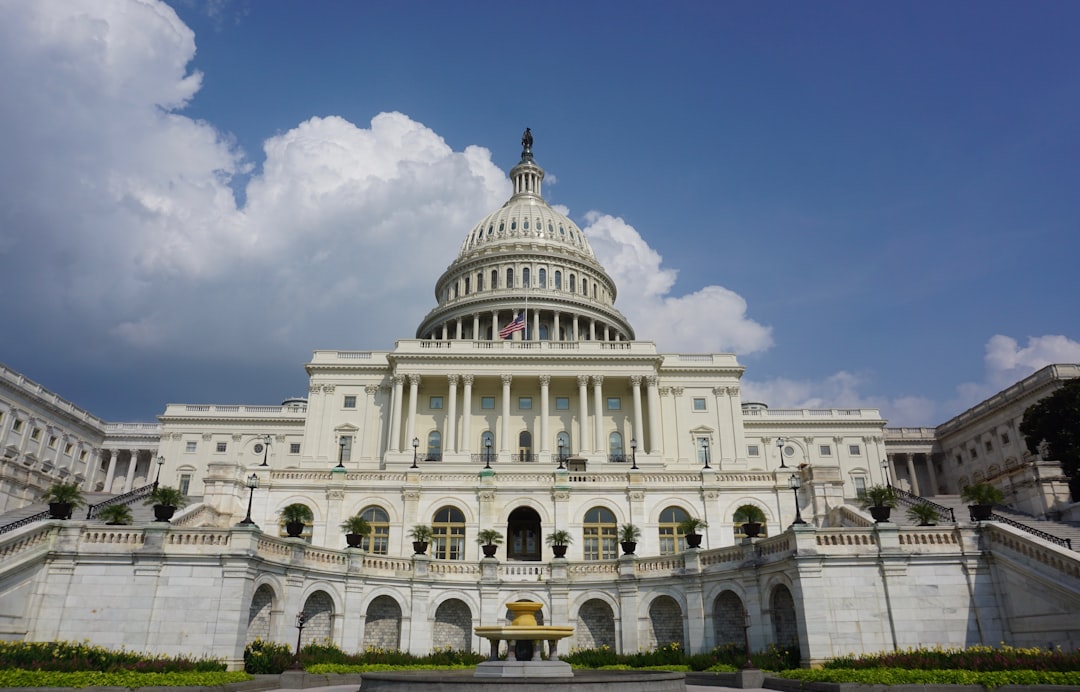
With government funding set to expire in September and midterm elections looming, Congress is once again racing to avoid a shutdown — this time on the heels of two of the most disruptive funding lapses in American history. The House voted Tuesday to kick the deadline to December, but the harder fight now moves to the Senate, where Republicans will need Democratic cooperation they may not get.
What Happened
The House passed a continuing resolution on Tuesday by a vote of 220 to 205, extending federal funding at current spending levels through December 4. Six Democrats broke with their party to support the bill, providing the narrow margin needed for passage. The measure now heads to the Senate, where it faces a 60-vote threshold — meaning Republican leaders must peel off at least a handful of Democrats to clear the chamber.
Speaker Mike Johnson made clear he views Democratic opposition as political maneuvering rather than principled governance. “They do this to try to score political points,” Johnson said. “I think they’re making the wrong calculation here.”
Democratic leaders opposed the measure in part over objections to the Trump administration’s deportation policies. House Republican hard-liners, meanwhile, used the funding debate to apply pressure on the Senate over the SAVE America Act — legislation that would require voters to provide proof of citizenship when registering and photo identification at the polls.
The Senate’s Path Forward
Senate Majority Leader John Thune indicated he intends to bring a funding vote to the floor before the chamber breaks for August recess. He also floated the possibility of using the budget reconciliation process if a bipartisan deal cannot be reached — a procedural move that would allow passage with a simple majority and cut Democrats out of the equation entirely. Thune was measured about that prospect, saying only, “I hope that’s not necessary.”
Reconciliation is not without precedent in this Congress. Earlier this year, Republicans used that same procedure to fund the Department of Homeland Security through the remainder of President Trump’s term after a 76-day DHS shutdown ground operations at the agency to a halt.
By the Numbers
220-205: The final House vote, with six Democrats crossing the aisle to support the extension.
60 votes: The Senate threshold required for the bill to advance — a bar that forces Republicans to negotiate with Democrats unless they invoke reconciliation.
76 days: The length of the DHS shutdown that opened 2026, the longest agency-level funding lapse in recent memory.
45 days: The duration of last year’s broader government shutdown, which set a record for the longest full-government shutdown in American history.
December 4: The new funding deadline, pushing the fight past the midterm election cycle — at least for now.
The Broader Picture
American taxpayers have now lived through back-to-back historic funding crises. The 45-day shutdown last year disrupted federal services, idled hundreds of thousands of federal workers, and rattled financial markets. The 76-day DHS lapse that followed put border enforcement operations under strain at a moment when the administration was pursuing one of the most aggressive immigration enforcement agendas in decades. Both episodes have raised serious questions about whether Congress can perform its most basic constitutional duty: funding the government on time.
The December 4 extension, if it clears the Senate, would defer the next confrontation until after the November midterms — a calculation that suits both parties for different reasons. Republicans want the issue off the table during campaign season; Democrats may prefer to fight on more favorable terrain after election results reshape the balance of power.
The deeper structural problem remains. Continuing resolutions lock spending at prior levels and do little to address the underlying weaknesses in federal fiscal management that have made shutdown brinkmanship an annual event. Without a serious reckoning on government spending, the December deadline will simply become the next cliff.
Category: Republic
Tags: Congress, Spending, Speaker Mike Johnson, Senate
The Republic Standard News Staff