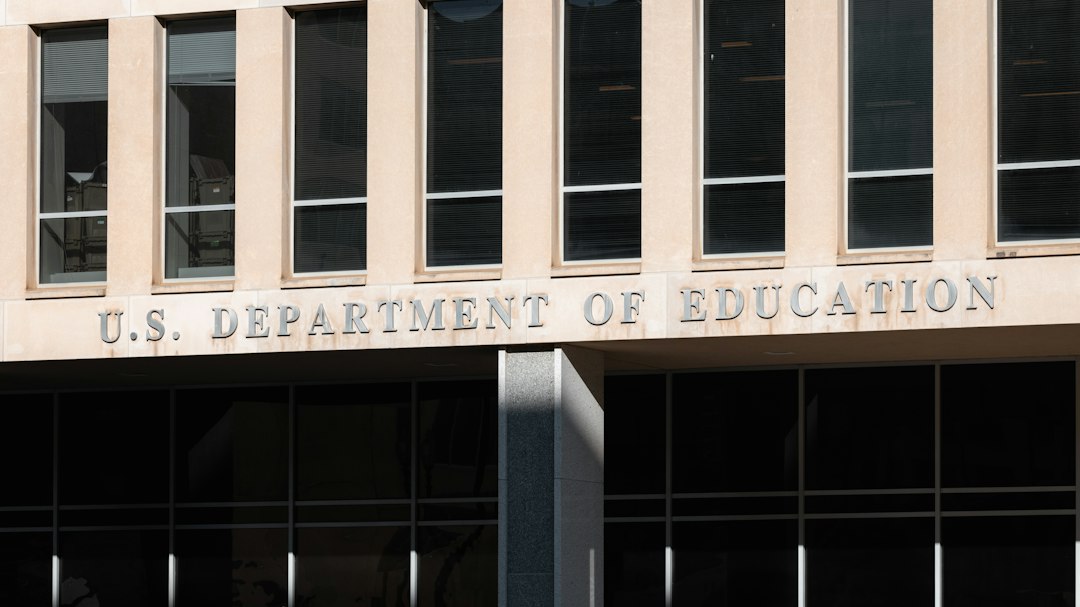
The Government Accountability Office has issued a stark warning that billions of taxpayer dollars allocated for K-12 education are now vulnerable to waste, fraud, and abuse. The federal watchdog’s report highlights a critical lapse in oversight after the U.S. Department of Education suspended its comprehensive monitoring process this year.
Federal Oversight Suspended
The Department of Education halted consolidated monitoring of Elementary and Secondary Education Act (ESEA) requirements while it develops a new approach to compliance reviews. This suspension leaves a significant gap in the federal government’s ability to verify that states are adhering to their approved state plans.
“As a result of suspending consolidated monitoring, Education will not be able to systematically assess whether states are complying with ESEA requirements and following their approved state plans,” the report said.
Consolidated monitoring was fully implemented in 2019. Since the suspension, half of all states remain unmonitored for reporting requirements that apply universally. As of August, the Education Department had not provided a timeline for resuming these reviews or offered details on alternative methods to ensure compliance.
Financial Stakes and Data Integrity
The financial implications of this oversight gap are substantial. Title I funding, which supports schools with high numbers of low-income students, represents about two-thirds of the nearly $27 billion in total ESEA funding for 2025. States receiving these funds are required to develop statewide accountability systems and report specific data on chronic absenteeism.
The GAO report raises serious concerns about the reliability of the federal absenteeism data currently being collected. The Education Department defines chronic absenteeism as missing 10% or more of school days. However, the agency directs states to report chronically absent students over a full school year while calculating total enrollment based on a single date.
“Calculating rates using mismatched timeframes has resulted in unreliable and implausible chronic absenteeism rates (e.g., rates over 100 percent),” the GAO said.
Implausible Reporting Rates
This methodological flaw has produced data that defies logic. Some schools have reported absenteeism rates above 100%, a statistical impossibility that indicates fundamental errors in how the data is aggregated and reported. These discrepancies are particularly notable in low-performing schools, those with fluctuating enrollment, and institutions housing career and technical education programs.
The GAO found that nearly 13% of Comprehensive Support and Improvement schools reported implausible rates exceeding 100%. In contrast, only about 2% of schools not in that category showed similar errors. The issue is most acute in shared-time schools, where students split their day between different institutions.
Nationally, 30% of shared-time schools exhibited implausible chronic absenteeism rates, compared to under 2% of other schools. In Pennsylvania, the problem was pervasive: 98% of shared-time schools reported impossible absenteeism figures.
State Variations and National Trends
Not all states are affected equally by these data integrity issues. Delaware, Idaho, Maryland, Missouri, North Carolina, and Rhode Island had no shared-time schools with implausible rates. These jurisdictions appear to have managed their reporting more accurately despite the flawed federal framework.
Chronic absenteeism has remained elevated following the COVID-19 pandemic, with estimates suggesting that one-quarter of K-12 students were chronically absent in recent years. Accurate data is essential for policymakers and school administrators to address this trend effectively. Without reliable metrics, it is difficult to determine which schools are struggling and where resources should be directed.
The suspension of monitoring comes at a time when federal education spending is under scrutiny. Taxpayers expect that the billions of dollars distributed through ESEA programs are being used efficiently and that states are meeting their obligations. The GAO’s findings suggest that the current lack of oversight undermines that accountability.
The Education Department has not yet outlined how it will address these gaps or when it plans to resume systematic reviews. Until a new monitoring framework is in place, the risk of undetected misuse of federal funds remains high.