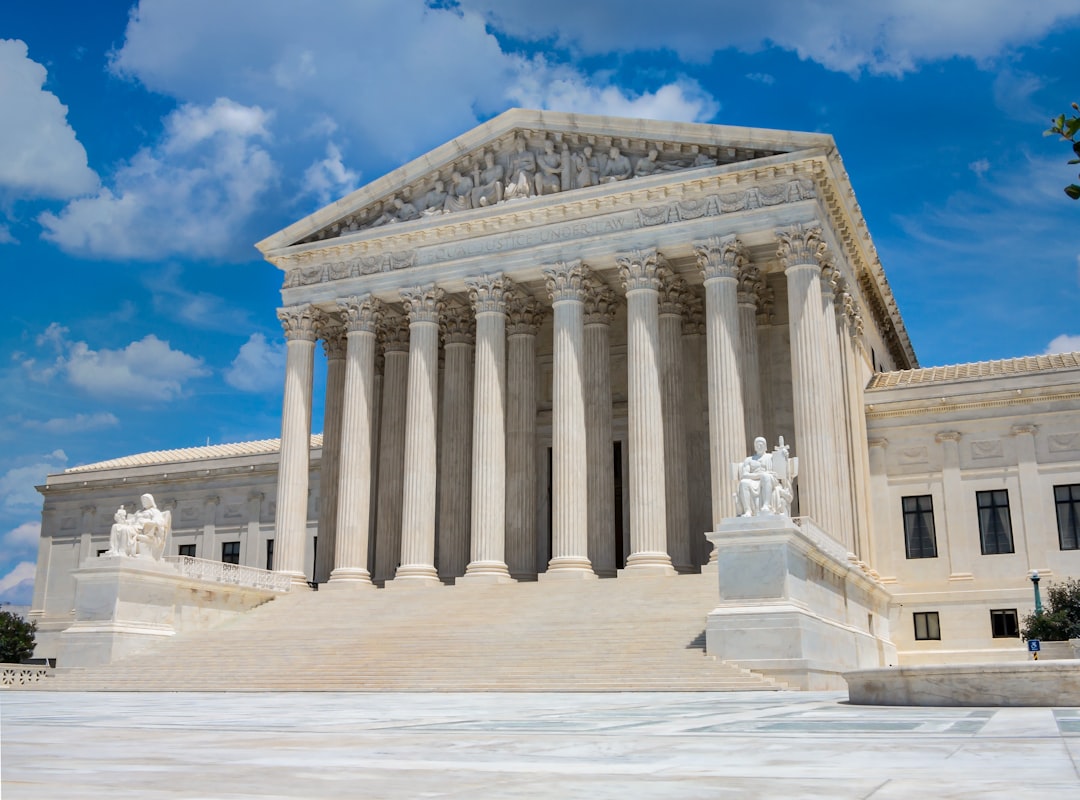
The independence of federal regulatory agencies — long treated as a structural safeguard against shifting political winds — is now in serious question after a landmark Supreme Court decision handed the executive branch its most significant expansion of presidential authority in nearly a century.
The Stakes
The ruling touches every American who deals with a regulated market, a broadcast license, or a financial account. Agencies like the Securities and Exchange Commission and the Federal Communications Commission were built on the premise that some decisions require specialized, apolitical expertise rather than the preferences of a single administration. Whether that model survives its current legal challenge has major implications for constitutional governance, the balance of federal power, and the accountability of bureaucracies that affect daily economic life. As the country debates how deeply federal policy shapes who actually controls the American economy, the question of who controls the regulators has rarely been more urgent.
What Happened
The Supreme Court issued its ruling in Trump v. Slaughter in June, striking down a longstanding precedent that had protected the heads of independent federal agencies from being dismissed without cause. The decision essentially dismantled nearly a century of legal insulation that Congress had constructed around agency leadership.
President Trump moved quickly. Within ten days of the ruling, he fired two Democratic commissioners from the Election Assistance Commission, a swift and deliberate signal that the administration intended to use its newly confirmed authority without delay.
Independent agencies were designed with specific structural features to limit presidential influence: fixed and staggered terms for commissioners, requirements for bipartisan board membership, and for-cause removal protections that prevented presidents from replacing agency heads over policy disagreements. The Court’s ruling now calls much of that architecture into question.
The theoretical foundation for this shift is the unitary executive theory, developed by conservative legal scholars in the 1980s. It draws directly from Article II of the Constitution, which states that “the executive power” is “vested in a President.” Proponents argue that this language means the president must retain meaningful control over all executive branch functions, including those Congress delegated to ostensibly independent bodies.
John Yoo, a law professor at UC Berkeley and a prominent advocate of expansive executive authority, framed the ruling in democratic terms: “the people have a greater say now in the way the laws are carried out.”
By the Numbers
The practical reach of independent agencies is not abstract. Under FTC Chairman William Kovacic, the commission secured a $114 million consumer settlement from a credit card company accused of violating federal law, and issued a prohibition against a major retailer making unsubstantiated product claims — both actions taken around 2008 and 2009. Kovacic described those outcomes as reflecting “the best policies for the nation,” a standard that, under the new legal framework, will increasingly require alignment with White House priorities to survive. A 2003 book by political scientist David Lewis, Presidents and the Politics of Agency Design, documented the long tension between congressional intent and presidential influence over agency structure — a tension that has now been resolved in the executive’s favor. The unitary executive doctrine that underlies the ruling has been developing in conservative legal circles since the 1980s, finally reaching its logical conclusion in this term’s decision.
The Broader Picture
Congress originally created independent agencies to insulate specialized regulatory decisions from the political cycle. The assumption was that financial markets, communications infrastructure, and electoral administration benefit from continuity and technical expertise that no single administration should be able to override on a whim. That assumption is now legally unsettled.
The ruling does not eliminate independent agencies outright, but it strips the structural guarantee of their independence. A president who can fire commissioners at will can, in practice, ensure that those bodies reflect executive branch policy rather than the congressional mandates they were created to carry out.
The implications extend well beyond regulatory policy. As America works to rebuild domestic industrial capacity, the question of whether regulatory decisions are made by accountable elected officials or insulated bureaucrats sits at the center of every trade, energy, and manufacturing debate Congress faces. With Republicans holding slim majorities and the 2026 midterms approaching, how the administration wields this expanded authority will shape the political landscape for years to come.
The Republic Standard News Staff
Category: Republic
Tags: Supreme Court, White House, Congress, Donald Trump