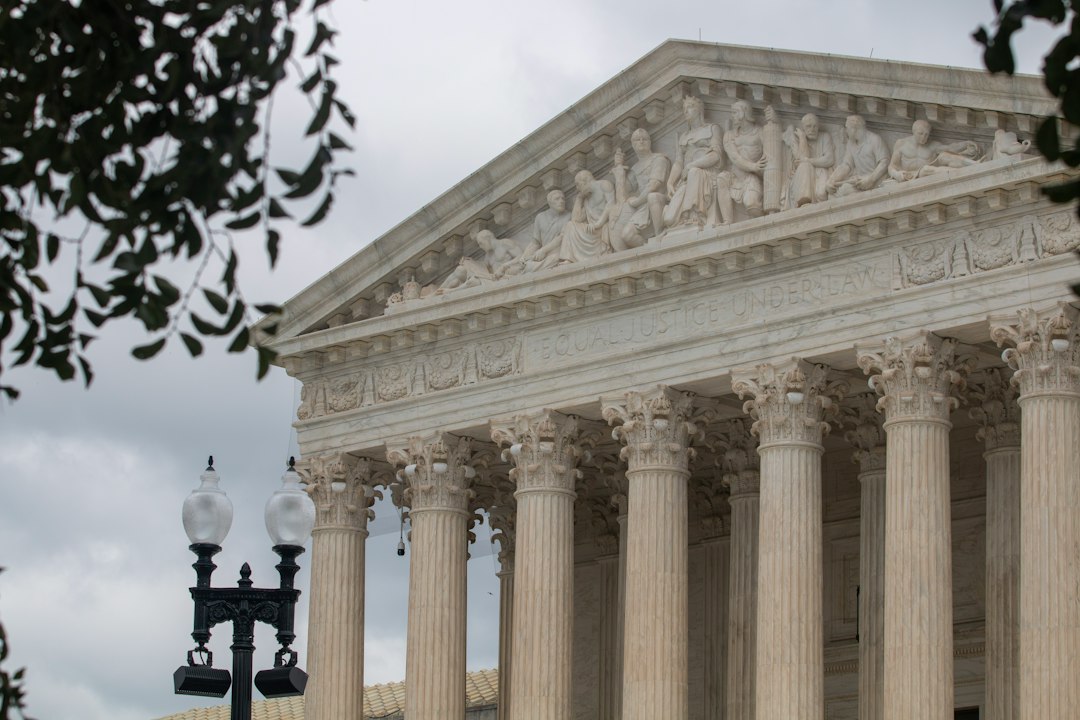
The Supreme Court added three cases to its oral argument docket for the 2026-27 term on Tuesday, signaling a continued focus on executive branch authority and immigration enforcement. The high court agreed to hear arguments regarding the scope of discovery in a dispute over the Department of Government Efficiency (DOGE) and will review a case defining what constitutes material support for terrorism.
The first major case involves a legal battle between DOGE and Citizens for Responsibility and Ethics in Washington (CREW). President Donald Trump established DOGE in January 2025 to modernize federal technology and maximize governmental efficiency. CREW filed a Freedom of Information Act request last year seeking communications between DOGE administrator Amy Gleason and staff, as well as financial disclosures from agency personnel. The group sued in federal court in Washington to determine if DOGE qualifies as a federal agency subject to FOIA mandates.
U.S. District Judge Christopher Cooper granted most of CREW’s discovery requests. The U.S. Court of Appeals for the District of Columbia Circuit denied DOGE’s request to pause Judge Cooper’s order. In May 2025, U.S. Solicitor General D. John Sauer asked the Supreme Court to intervene. Sauer argued that the lower court’s actions “offends the separation of powers by compromising the ‘necessity” of executive confidentiality.
In early June 2025, the Supreme Court issued an unsigned two-page order sending the dispute back to the D.C. Circuit. Justices Sonia Sotomayor, Elena Kagan, and Ketanji Brown Jackson objected to that order. The majority ruled that discovery orders requiring disclosure of DOGE’s internal recommendations were too broad. The Supreme Court placed Judge Cooper’s discovery orders on hold while litigation continued.
CREW modified its discovery requests upon remand, dropping requests for information about “recommendations.” Lower courts declined to block CREW’s modified requests. DOGE petitioned the Supreme Court in March regarding the D.C. Circuit’s approval of intrusive discovery. The Supreme Court agreed on Tuesday to address the D.C. Circuit’s ruling in U.S. Doge Service v. U.S. District Court for the District of Columbia.
The second case, Blanche v. Ozurumba, was brought to the Supreme Court via a petition filed in May by the Trump administration. Izuchukwu Ozurumba is a native and citizen of Nigeria who worked as a cook for the “Unknown Gunmen” separatist organization for about six months. Ozurumba escaped the camp, traveled to Venezuela, then the United States, where he applied for asylum.
An immigration judge and the Board of Immigration Appeals ruled Ozurumba ineligible for asylum due to providing “material support” for terrorism. The Supreme Court will now review whether working as a cook for a separatist group qualifies as material support under federal law.
Key Figures
The 2026-27 term begins with these three cases on the docket. DOGE was created in January 2025. CREW filed its FOIA request last year. Solicitor General Sauer asked for Supreme Court intervention in May 2025. The unsigned order was issued in early June 2025. Justices Sotomayor, Kagan, and Jackson objected to that order. DOGE petitioned the Court in March. The Ozurumba petition was filed in May. Ozurumba worked for the group for about six months.
The Broader Picture
The Supreme Court’s decision to hear these cases reflects ongoing tensions between executive branch secrecy and transparency demands. The DOGE case tests the limits of FOIA requests against a new federal agency. The Ozurumba case clarifies the definition of material support for terrorism in asylum proceedings.