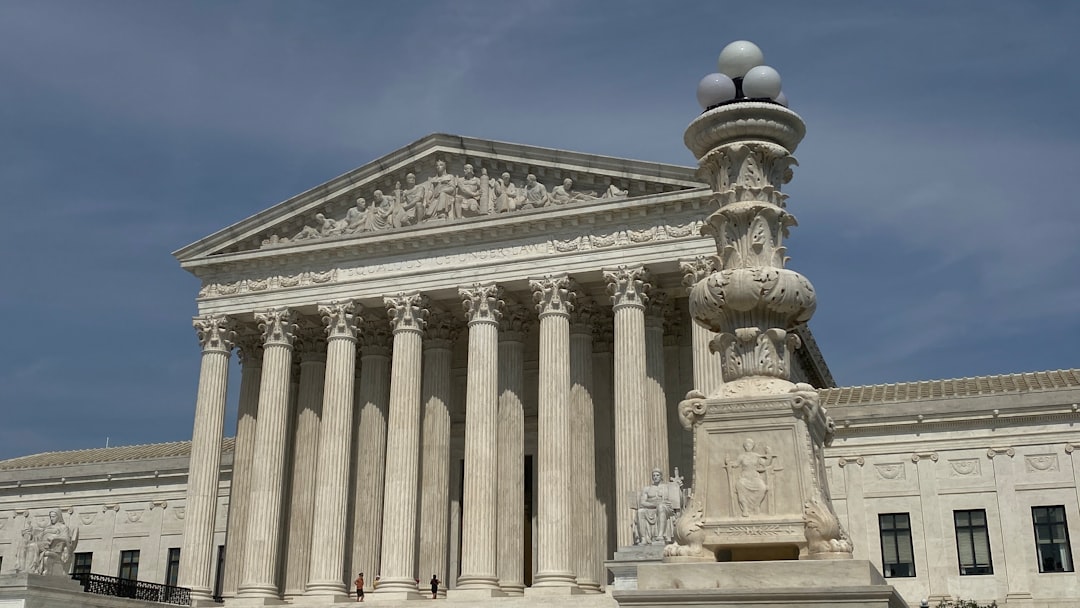
With November midterm elections approaching and mail-in balloting set to begin in some states within weeks, the Supreme Court on Monday removed a significant legal obstacle to President Trump’s executive order tightening restrictions on mail-in voting. The ruling carries direct consequences for election administration across much of the country and sets up a major constitutional confrontation over federal authority in elections.
What the Court Did
The Supreme Court’s unsigned majority opinion, running ten pages, paused a federal judge’s injunction that had blocked the executive order from taking effect in 23 states and the District of Columbia. The majority grounded its decision in a procedural rationale: the legal challenge was brought too early, because the order has not yet been carried out and the states have not yet suffered the concrete injury required to sustain a lawsuit at this stage.
One important carve-out remains. A separate federal judge’s ruling continues to prohibit the U.S. Postal Service from implementing a specific provision of the order on a nationwide basis. That prohibition was not touched by Monday’s Supreme Court action and stays in place.
Twelve states filed in support of the Trump administration’s position, while 23 states and the District of Columbia stood on the opposing side. The Court’s three Democratic-appointed justices dissented from the majority’s decision.
The Executive Order and Its Timeline
President Trump signed the executive order in March. The administration brought the case to the Supreme Court on July 27, after lower courts moved to block implementation. Challengers submitted their response on August 3. Solicitor General D. John Sauer warned the Court that the injunction “blocks the government’s ability to finalize and implement the President’s proposed policies to promote election integrity for the upcoming federal elections in November,” as quoted by SCOTUSblog.
Among the order’s requirements is a deadline obligating the Department of Homeland Security to transmit citizenship verification lists to states 60 days before a federal election. Sauer told the Court that mail-in and absentee voting is estimated to begin in some states within roughly one month, underscoring the urgency the administration attached to getting the lower court injunction lifted before those windows open.
By the Numbers
23 states plus the District of Columbia mounted the legal challenge to the executive order.
12 states intervened in support of the administration.
10 pages: length of the Supreme Court’s unsigned majority opinion.
60 days: deadline in the order for DHS to provide citizenship lists to states ahead of a federal election.
November 3, 2026: the date through which one federal judge had prohibited any implementation before Monday’s Supreme Court ruling intervened.
Jackson’s Dissent
Justice Ketanji Brown Jackson authored a 23-page dissent, sharply criticizing the majority’s procedural reasoning. She wrote that the Court was taking “its eye off the ball” and thereby “miss[ing] the Government’s actual objective: to secure our imprimatur for its effort to foment chaos ahead of the November elections,” as quoted by SCOTUSblog. Jackson argued that the majority’s focus on ripeness allowed the administration to sidestep meaningful judicial scrutiny at a moment when the practical consequences are most immediate.
The Broader Stakes
The decision lands at a politically charged moment. The Supreme Court’s willingness to act before the midterms effectively hands the administration room to begin putting its election integrity framework into place before balloting opens. Whether the underlying executive order survives further legal challenges remains an open question, but the Court’s procedural ruling means those challenges will have to wait for implementation to actually occur before courts can revisit them on the merits.
The administration has framed the order as a necessary step toward verifying voter citizenship and reducing fraud risks in federal elections. Opponents contend it threatens ballot access and disrupts state-run election systems. With voting set to begin in some states within weeks, Monday’s ruling ensures the legal fight over mail-in voting will remain at the center of the 2026 election cycle.
Category: Constitution | Tags: Supreme Court, Elections, White House, Ketanji Brown Jackson