Federal agents operating under the Department of Homeland Security obtained months of private telephone records and sought social media account data on journalists and civic organizations without judicial approval, using an obscure customs statute that legal experts say was never intended for domestic surveillance of any kind.
The tactic raises serious questions about the separation of powers, the limits of executive authority, and whether federal agencies can route around judges who refuse to authorize searches.
What Happened
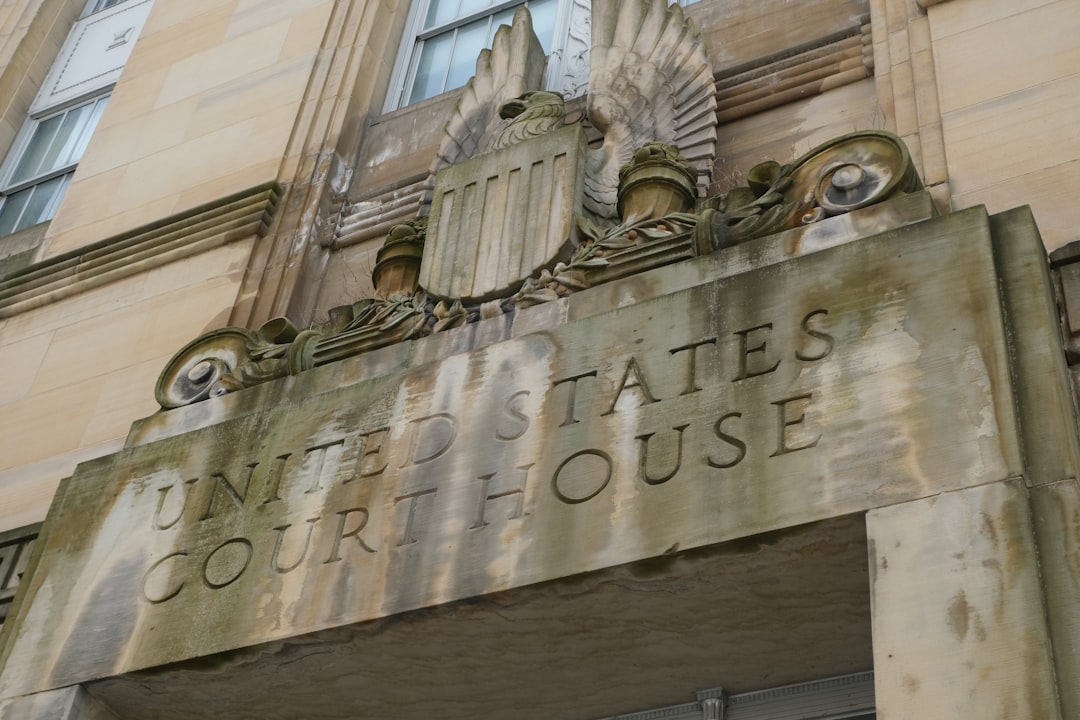
Federal prosecutors applied twice in February for search warrants targeting the YouTube account information of Georgia Fort, a journalist based in Minneapolis, and Don Lemon, the former CNN anchor. A federal judge rejected both applications, ruling the government had not established probable cause and stating that Fort and Lemon should have been notified. The government withdrew its warrant request in late February.
Within less than one month, DHS served Google with an administrative summons seeking the same YouTube account data the judge had refused to authorize. The summons cited 19 USC 1509, a provision of federal law dealing with customs imports and trade compliance. DHS also instructed recipients of the summons to keep it confidential.
Separately, DHS obtained six months of telephone records from T-Mobile covering Fort’s communications, a dataset encompassing more than 10,000 individual calls and text messages. Fort was not informed that the records had been collected until mid-July, when government lawyers produced them in a legal proceeding.
The government’s request for YouTube data extended beyond Fort and Lemon. DHS also sought account information for Democracy Now, Megyn Kelly, the Milwaukee Journal-Sentinel, and independent journalist Brendan Gutenschwager. YouTube account data of the type sought includes IP addresses and login timing, which can be used to identify a user’s physical location and activity patterns.
Legal Experts Push Back
The use of a customs import statute to compel records in what amounts to a domestic journalism investigation drew sharp criticism from attorneys familiar with DHS legal authorities.
Chris Duncan, a former DHS lawyer, called the practice a clear overreach. “These laws have absolutely nothing to do with a domestic situation at a church, a social media post, even an immigration matter,” Duncan told The Guardian. “It’s outrageous conduct on so many levels. It’s hard to know where to begin.”
John Roth, who served as DHS inspector general from 2014 to 2017, was equally direct. “This is an improper use of the subpoena under any circumstances,” Roth told The Guardian. “This is not a customs case; it is not a customs violation.”
Both former officials pointed to the same core problem: the statute being invoked was drafted to help federal agents enforce trade law at the border, not to gather intelligence on journalists or advocacy organizations operating inside the United States.
By the Numbers
6 months of telephone records were obtained from T-Mobile for Georgia Fort. More than 10,000 calls and text messages were captured in that data. 2 separate search warrant applications were filed in February and rejected by a federal judge. 19 USC 1509 is the customs statute DHS cited to justify the administrative summons to Google. Fort was not notified of the T-Mobile records collection until mid-July, roughly five months after the records were pulled.
The Broader Picture
The sequence of events follows a troubling pattern: a judge acting as a check on executive power refused to authorize surveillance, and the executive branch subsequently found an administrative mechanism to accomplish the same objective without returning to court. That dynamic, if left unchallenged, effectively makes judicial oversight optional whenever agencies can identify an alternative statutory hook.
Administrative summonses are a legitimate and widely used tool in regulatory enforcement, but they traditionally operate in commercial and trade contexts, not domestic newsgathering. The expansion of that authority into journalism and nonprofit activity represents a significant shift in how federal power is being exercised.
For Americans who believe constitutional limits on government mean something concrete, the use of a customs import law to secretly pull a journalist’s phone records without a judge’s sign-off is precisely the kind of unchecked federal conduct those limits were designed to prevent. The question now is whether Congress or the courts will step in to draw a clearer line.
The Republic Standard News Staff
Category: Republic | Tags: National Security, Free Speech, DHS, Donald Trump